The Buffer Interface. More...
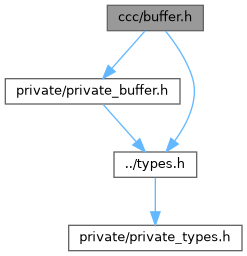
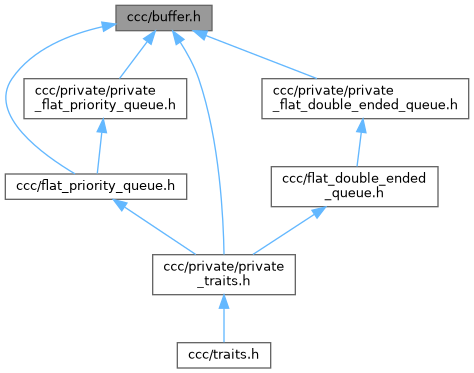
Go to the source code of this file.
Detailed Description
The Buffer Interface.
Buffer usage is similar to a C++ vector, with more flexible functions provided to support higher level containers and abstractions. While useful on its own–a stack could be implemented with the provided functions–a buffer is often used as the lower level abstraction for the flat data structures in this library that provide more specialized operations. A Buffer does not require the user accommodate any intrusive elements.
A Buffer offers a more flexible interface than a standard C++ vector. There are functions that assume elements are stored contiguously from [0, N) where N is the count of elements. However, there are also functions that let the user access any Buffer slot that is within the bounds of Buffer capacity. This requires the user pay closer attention to Buffer usage but ultimately allows a wider variety of abstractions on top of the buffer.
Interface functions in the slot management section offer data movement and writing operations that do not affect the size of the container. If writing a more complex higher level container that does not need size management these functions offer more custom control over the buffer.
A Buffer function that accepts an allocator will re-size as required when a new element is inserted in a contiguous fashion if an allocator is provided. Interface functions in the allocation management section assume elements are stored contiguously and adjust size accordingly.
If an allocator is not provided, resizing will not occur and the insertion function will fail when capacity is reached, returning some value to indicate failure.
If shorter names are desired, define the following preprocessor directive.
Then, the CCC_ prefix can be dropped from all types and functions.
Initialization Interface | |
Initialize the container with memory, callbacks, and permissions. | |
| #define | CCC_buffer_default(type_name) CCC_private_buffer_default(type_name) |
| Initialize a contiguous empty buffer of a type. | |
| #define | CCC_buffer_for(type_name, capacity, count, data_pointer...) CCC_private_buffer_for(type_name, capacity, count, data_pointer) |
| Initialize a contiguous Buffer of user a specified type, capacity, and optional starting size. | |
| #define | CCC_buffer_from( allocator, optional_capacity, compound_literal_array...) |
| Initialize a Buffer from a compound literal array initializer. | |
| #define | CCC_buffer_with_capacity(type_name, allocator, capacity) CCC_private_buffer_with_capacity(type_name, allocator, capacity) |
| Initialize a Buffer with a capacity. | |
| #define | CCC_buffer_with_storage(count, compound_literal_array...) CCC_private_buffer_with_storage(count, compound_literal_array) |
| Initialize a contiguous Buffer of user a specified type of fixed capacity with no allocation permission or context. | |
| CCC_Result | CCC_buffer_reserve (CCC_Buffer *buffer, size_t to_add, CCC_Allocator const *allocator) |
| Reserves space for at least to_add more elements. | |
| CCC_Result | CCC_buffer_copy (CCC_Buffer *destination, CCC_Buffer const *source, CCC_Allocator const *allocator) |
| Copy the buffer from source to newly initialized destination. | |
Insert and Remove Interface | |
These functions assume contiguity of elements in the Buffer and increase or decrease size accordingly. | |
| #define | CCC_buffer_emplace_back( buffer_pointer, allocator_pointer, type_compound_literal...) |
| Pushes the user provided compound literal directly to back of buffer and increments the size to reflect the newly added element. | |
| CCC_Result | CCC_buffer_allocate (CCC_Buffer *buffer, size_t capacity, CCC_Allocator const *allocator) |
| allocates the Buffer to the specified size according to the user defined allocation function. | |
| void * | CCC_buffer_allocate_back (CCC_Buffer *buffer, CCC_Allocator const *allocator) |
| allocates a new slot from the Buffer at the end of the contiguous array. A slot is equivalent to one of the element type specified when the Buffer is initialized. | |
| void * | CCC_buffer_push_back (CCC_Buffer *buffer, void const *data, CCC_Allocator const *allocator) |
| return the newly pushed data into the last slot of the buffer according to size. | |
| void * | CCC_buffer_insert (CCC_Buffer *buffer, size_t index, void const *data, CCC_Allocator const *allocator) |
| insert data at slot index according to size of the Buffer maintaining contiguous storage of elements between 0 and size. | |
| CCC_Result | CCC_buffer_pop_back (CCC_Buffer *buffer) |
| pop the back element from the Buffer according to size. | |
| CCC_Result | CCC_buffer_pop_back_n (CCC_Buffer *buffer, size_t count) |
| pop count elements from the back of the Buffer according to size. | |
| CCC_Result | CCC_buffer_erase (CCC_Buffer *buffer, size_t index) |
| erase element at slot index according to size of the Buffer maintaining contiguous storage of elements between 0 and size. | |
Slot Management Interface | |
These functions interact with slots in the Buffer directly and do not modify the size of the buffer. These are best used for custom container types operating at a higher level of abstraction. | |
| #define | CCC_buffer_as(buffer_pointer, type_name, index) ((type_name *)CCC_buffer_at(buffer_pointer, index)) |
| Access en element at the specified index as the stored type. | |
| #define | CCC_buffer_back_as(buffer_pointer, type_name) ((type_name *)CCC_buffer_back(buffer_pointer)) |
| return the final element in the Buffer according the current size. | |
| #define | CCC_buffer_front_as(buffer_pointer, type_name) ((type_name *)CCC_buffer_front(buffer_pointer)) |
| return the first element in the Buffer at index 0. | |
| #define | CCC_buffer_emplace(buffer_pointer, index, type_compound_literal...) CCC_private_buffer_emplace(buffer_pointer, index, type_compound_literal) |
| Writes a user provided compound literal directly to a Buffer slot. | |
| void * | CCC_buffer_at (CCC_Buffer const *buffer, size_t index) |
| return the element at slot index in buf. | |
| CCC_Count | CCC_buffer_index (CCC_Buffer const *buffer, void const *slot) |
| return the index of an element known to be in the buffer. | |
| void * | CCC_buffer_back (CCC_Buffer const *buffer) |
| return the final element in the Buffer according the current size. | |
| void * | CCC_buffer_front (CCC_Buffer const *buffer) |
| return the first element in the Buffer at index 0. | |
| void * | CCC_buffer_move (CCC_Buffer const *buffer, size_t destination, size_t source) |
| Move data at index source to destination according to capacity. | |
| CCC_Result | CCC_buffer_write (CCC_Buffer const *buffer, size_t index, void const *data) |
| write data to Buffer at slot at index index according to capacity. | |
| CCC_Result | CCC_buffer_swap (CCC_Buffer const *buffer, void *temp, size_t index, size_t swap_index) |
| swap elements at index and swap_index according to capacity of the bufer. | |
Container Types | |
Types available in the container interface. | |
| typedef struct CCC_Buffer | CCC_Buffer |
| A contiguous block of storage for elements of the same type. | |
Iteration Interface | |
The following functions implement iterators over the buffer. | |
| void * | CCC_buffer_begin (CCC_Buffer const *buffer) |
| obtain the base address of the Buffer in preparation for iteration. | |
| void * | CCC_buffer_next (CCC_Buffer const *buffer, void const *iterator) |
| advance the iterator to the next slot in the Buffer according to size. | |
| void * | CCC_buffer_end (CCC_Buffer const *buffer) |
| return the end position of the Buffer according to size. | |
| void * | CCC_buffer_reverse_begin (CCC_Buffer const *buffer) |
| obtain the address of the last element in the Buffer in preparation for iteration according to size. | |
| void * | CCC_buffer_reverse_next (CCC_Buffer const *buffer, void const *iterator) |
| advance the iterator to the next slot in the Buffer according to size and in reverse order. | |
| void * | CCC_buffer_reverse_end (CCC_Buffer const *buffer) |
| return the reverse_end position of the buffer. | |
State Interface | |
These functions help manage or obtain state of the buffer. | |
| CCC_Result | CCC_buffer_count_plus (CCC_Buffer *buffer, size_t count) |
| add count to the size of the buffer. | |
| CCC_Result | CCC_buffer_count_minus (CCC_Buffer *buffer, size_t count) |
| Subtract count from the size of the buffer. | |
| CCC_Result | CCC_buffer_count_set (CCC_Buffer *buffer, size_t count) |
| Set the Buffer size to n. | |
| CCC_Count | CCC_buffer_count (CCC_Buffer const *buffer) |
| obtain the count of Buffer active slots. | |
| CCC_Count | CCC_buffer_capacity (CCC_Buffer const *buffer) |
| Return the current capacity of total possible slots. | |
| CCC_Count | CCC_buffer_sizeof_type (CCC_Buffer const *buffer) |
| The size of the type being stored contiguously in the buffer. | |
| CCC_Count | CCC_buffer_count_bytes (CCC_Buffer const *buffer) |
| Return the bytes in the Buffer given the current count of active elements. | |
| CCC_Count | CCC_buffer_capacity_bytes (CCC_Buffer const *buffer) |
| Return the bytes in the Buffer given the current capacity elements. | |
| CCC_Tribool | CCC_buffer_is_empty (CCC_Buffer const *buffer) |
| return true if the size of the Buffer is 0. | |
| CCC_Tribool | CCC_buffer_is_full (CCC_Buffer const *buffer) |
| return true if the size of the Buffer equals capacity. | |
| void * | CCC_buffer_data (CCC_Buffer const *buffer) |
| return a reference to the underlying data of the buffer. | |
Deallocation Interface | |
Free the elements of the container and the underlying buffer. | |
| CCC_Result | CCC_buffer_clear_and_free (CCC_Buffer *buffer, CCC_Destructor const *destructor, CCC_Allocator const *allocator) |
| Set size of buffer to 0 and call destroy on each element if needed. Free the underlying Buffer setting the capacity to 0. O(1) if no destructor is provided, else O(N). | |
| CCC_Result | CCC_buffer_clear (CCC_Buffer *buffer, CCC_Destructor const *destructor) |
| Set size of buffer to 0 and call destroy on each element if needed. O(1) if no destroy is provided, else O(N). | |
Macro Definition Documentation
◆ CCC_buffer_as
| #define CCC_buffer_as | ( | buffer_pointer, | |
| type_name, | |||
| index | |||
| ) | ((type_name *)CCC_buffer_at(buffer_pointer, index)) |
Access en element at the specified index as the stored type.
- Parameters
-
[in] buffer_pointer the pointer to the buffer. [in] type_name the name of the stored type. [in] index the index within capacity range of the buffer.
- Returns
- a pointer to the element in the slot at position index or NULL if index is out of capacity range.
Note that as long as the index is valid within the capacity of the Buffer a valid pointer is returned, which may result in a slot of old or uninitialized data. It is up to the user to ensure the index provided is within the current size of the buffer.
◆ CCC_buffer_back_as
| #define CCC_buffer_back_as | ( | buffer_pointer, | |
| type_name | |||
| ) | ((type_name *)CCC_buffer_back(buffer_pointer)) |
return the final element in the Buffer according the current size.
- Parameters
-
[in] buffer_pointer the pointer to the buffer. [in] type_name the name of the stored type.
- Returns
- the pointer the final element in the Buffer according to the current size or NULL if the Buffer does not exist or is empty.
◆ CCC_buffer_default
| #define CCC_buffer_default | ( | type_name | ) | CCC_private_buffer_default(type_name) |
Initialize a contiguous empty buffer of a type.
- Parameters
-
[in] type_name the name of the user type in the buffer.
- Returns
- the initialized buffer. Directly assign to Buffer on the right hand side of the equality operator.
Initialization of a Buffer can occur at compile time or run time.
The buffer will be empty with a count and capacity of 0.
◆ CCC_buffer_emplace
| #define CCC_buffer_emplace | ( | buffer_pointer, | |
| index, | |||
| type_compound_literal... | |||
| ) | CCC_private_buffer_emplace(buffer_pointer, index, type_compound_literal) |
Writes a user provided compound literal directly to a Buffer slot.
- Parameters
-
[in] buffer_pointer a pointer to the buffer. [in] index the desired index at which to insert an element. [in] type_compound_literal the direct compound literal as provided.
- Returns
- a pointer to the inserted element or NULL if insertion failed.
- Warning
- The index provided is only checked to be within capacity bounds so it is the user's responsibility to ensure the index is within the contiguous range of [0, size). This insert method does not increment the size of the buffer.
Any function calls that set fields of the compound literal will not be evaluated if the provided index is out of range of the Buffer capacity.
◆ CCC_buffer_emplace_back
| #define CCC_buffer_emplace_back | ( | buffer_pointer, | |
| allocator_pointer, | |||
| type_compound_literal... | |||
| ) |
Pushes the user provided compound literal directly to back of buffer and increments the size to reflect the newly added element.
- Parameters
-
[in] buffer_pointer a pointer to the buffer. [in] allocator_pointer a pointer to the CCC_Allocator [in] type_compound_literal the direct compound literal as provided.
- Returns
- a pointer to the inserted element or NULL if insertion failed.
Any function calls that set fields of the compound literal will not be evaluated if the Buffer fails to allocate a slot at the back of the buffer. This may occur if resizing fails or is prohibited.
◆ CCC_buffer_for
| #define CCC_buffer_for | ( | type_name, | |
| capacity, | |||
| count, | |||
| data_pointer... | |||
| ) | CCC_private_buffer_for(type_name, capacity, count, data_pointer) |
Initialize a contiguous Buffer of user a specified type, capacity, and optional starting size.
- Parameters
-
[in] type_name the name of the user type in the buffer. [in] capacity the capacity of memory at data_pointer. [in] count optional starting size of the Buffer <= capacity. [in] data_pointer the pointer to existing memory or NULL.
- Returns
- the initialized buffer. Directly assign to Buffer on the right hand side of the equality operator.
Initialization of a Buffer can occur at compile time or run time depending on the arguments. The memory pointer should be of the same type one intends to store in the buffer.
Initialize a fixed Buffer with some elements occupied.
Ensure the count is less than equal to capacity.
◆ CCC_buffer_from
| #define CCC_buffer_from | ( | allocator, | |
| optional_capacity, | |||
| compound_literal_array... | |||
| ) |
Initialize a Buffer from a compound literal array initializer.
- Parameters
-
[in] allocator a pointer to CCC_Allocator. [in] optional_capacity optionally specify the capacity of the Buffer if different from the size of the compound literal array initializer. If the capacity is greater than the size of the compound literal array initializer, it is respected and the capacity is reserved. If the capacity is less than the size of the compound array initializer, the compound literal array initializer size is set as the capacity. Therefore, 0 is valid if one is not concerned with the underlying reservation. [in] compound_literal_array the initializer of the type stored in buffer.
- Returns
- the initialized buffer. Directly assign to Buffer on the right hand side of the equality operator (e.g. CCC_Buffer b = CCC_buffer_from(...);).
Initialize a dynamic Buffer with a compound literal array.
Initialize a dynamic Buffer with a compound literal array with capacity and context
Only dynamic buffers may be initialized this way. For static or stack based initialization of fixed buffers with contents known at compile time, see the CCC_buffer_for() macro.
◆ CCC_buffer_front_as
| #define CCC_buffer_front_as | ( | buffer_pointer, | |
| type_name | |||
| ) | ((type_name *)CCC_buffer_front(buffer_pointer)) |
return the first element in the Buffer at index 0.
- Parameters
-
[in] buffer_pointer the pointer to the buffer. [in] type_name the name of the stored type.
- Returns
- the pointer to the front element or NULL if the Buffer does not exist or is empty.
◆ CCC_buffer_with_capacity
| #define CCC_buffer_with_capacity | ( | type_name, | |
| allocator, | |||
| capacity | |||
| ) | CCC_private_buffer_with_capacity(type_name, allocator, capacity) |
Initialize a Buffer with a capacity.
- Parameters
-
[in] type_name any user or language standard type name. [in] allocator a pointer to CCC_Allocator. [in] capacity the capacity of the Buffer to reserve.
- Returns
- the initialized buffer. Directly assign to Buffer on the right hand side of the equality operator (e.g. CCC_Buffer b = CCC_buffer_with_capacity(...);).
Initialize a dynamic buffer.
Only dynamic buffers may be initialized this way. For static or stack based initialization of fixed buffers with contents known at compile time, see the CCC_buffer_for() macro.
◆ CCC_buffer_with_storage
| #define CCC_buffer_with_storage | ( | count, | |
| compound_literal_array... | |||
| ) | CCC_private_buffer_with_storage(count, compound_literal_array) |
Initialize a contiguous Buffer of user a specified type of fixed capacity with no allocation permission or context.
- Parameters
-
[in] count starting count of the Buffer <= capacity of input literal. [in] compound_literal_array the compound literal array of types.
- Returns
- the initialized buffer. Directly assign to Buffer on the right hand side of the equality operator (e.g. CCC_Buffer b = CCC_buffer_with_storage(...);).
Initialization of a Buffer can occur at compile time or run time but always lacks any allocation permissions. The memory pointer should be of the same type one intends to store in the buffer.
Compile time creation of fixed capacity buffers can be a helpful use case when wrapping static or stack based arrays.
Typedef Documentation
◆ CCC_Buffer
| typedef struct CCC_Buffer CCC_Buffer |
A contiguous block of storage for elements of the same type.
- Warning
- it is undefined behavior to use an uninitialized buffer.
A Buffer may be initialized on the stack, heap, or data segment at compile time or runtime.
Function Documentation
◆ CCC_buffer_allocate()
| CCC_Result CCC_buffer_allocate | ( | CCC_Buffer * | buffer, |
| size_t | capacity, | ||
| CCC_Allocator const * | allocator | ||
| ) |
allocates the Buffer to the specified size according to the user defined allocation function.
- Parameters
-
[in] buffer a pointer to the buffer. [in] capacity the newly desired capacity. [in] allocator the allocation context defined by the user.
- Returns
- the result of reallocation.
◆ CCC_buffer_allocate_back()
| void * CCC_buffer_allocate_back | ( | CCC_Buffer * | buffer, |
| CCC_Allocator const * | allocator | ||
| ) |
allocates a new slot from the Buffer at the end of the contiguous array. A slot is equivalent to one of the element type specified when the Buffer is initialized.
- Parameters
-
[in] buffer a pointer to the buffer. [in] allocator the allocation context defined by the user.
- Returns
- a pointer to the newly allocated memory or NULL if no Buffer is provided or the Buffer is unable to allocate more memory.
- Note
- this function modifies the size of the container.
A Buffer can be used as the backing for more complex data structures. Requesting new space from a Buffer as an allocator can be helpful for these higher level organizations.
◆ CCC_buffer_at()
| void * CCC_buffer_at | ( | CCC_Buffer const * | buffer, |
| size_t | index | ||
| ) |
return the element at slot index in buf.
- Parameters
-
[in] buffer the pointer to the buffer. [in] index the index within capacity range of the buffer.
- Returns
- a pointer to the element in the slot at position index or NULL if index is out of capacity range.
Note that as long as the index is valid within the capacity of the Buffer a valid pointer is returned, which may result in a slot of old or uninitialized data. It is up to the user to ensure the index provided is within the current size of the buffer.
◆ CCC_buffer_back()
| void * CCC_buffer_back | ( | CCC_Buffer const * | buffer | ) |
return the final element in the Buffer according the current size.
- Parameters
-
[in] buffer the pointer to the buffer.
- Returns
- the pointer the final element in the Buffer according to the current size or NULL if the Buffer does not exist or is empty.
◆ CCC_buffer_begin()
| void * CCC_buffer_begin | ( | CCC_Buffer const * | buffer | ) |
obtain the base address of the Buffer in preparation for iteration.
- Parameters
-
[in] buffer the pointer to the buffer.
- Returns
- the base address of the buffer. This will be equivalent to the buffer end iterator if the Buffer size is 0. NULL is returned if a NULL argument is provided or the Buffer has not yet been allocated.
◆ CCC_buffer_capacity()
| CCC_Count CCC_buffer_capacity | ( | CCC_Buffer const * | buffer | ) |
Return the current capacity of total possible slots.
- Parameters
-
[in] buffer the pointer to the buffer.
- Returns
- the total number of elements the can be stored in the buffer. This value remains the same until a resize occurs. An argument error is set if buffer is NULL.
◆ CCC_buffer_capacity_bytes()
| CCC_Count CCC_buffer_capacity_bytes | ( | CCC_Buffer const * | buffer | ) |
Return the bytes in the Buffer given the current capacity elements.
- Parameters
-
[in] buffer the pointer to the buffer.
- Returns
- the number of bytes occupied by the current capacity elements.
For total possible bytes that can be stored in the Buffer given the current element count see CCC_buffer_count_bytes.
◆ CCC_buffer_clear()
| CCC_Result CCC_buffer_clear | ( | CCC_Buffer * | buffer, |
| CCC_Destructor const * | destructor | ||
| ) |
Set size of buffer to 0 and call destroy on each element if needed. O(1) if no destroy is provided, else O(N).
- Parameters
-
[in] buffer a pointer to the buf. [in] destructor the destroy function and context if needed, or the empty &(CCC_Destructor){}anonymous compound literal if not..
Note that if destroy is non-NULL it will be called on each element in the buf. However, the underlying Buffer for the buffer is not freed. If the destructor is NULL, setting the size to 0 is O(1). Elements are assumed to be contiguous from the 0th index to index at size - 1.
◆ CCC_buffer_clear_and_free()
| CCC_Result CCC_buffer_clear_and_free | ( | CCC_Buffer * | buffer, |
| CCC_Destructor const * | destructor, | ||
| CCC_Allocator const * | allocator | ||
| ) |
Set size of buffer to 0 and call destroy on each element if needed. Free the underlying Buffer setting the capacity to 0. O(1) if no destructor is provided, else O(N).
- Parameters
-
[in] buffer a pointer to the buf. [in] destructor the destroy function and context if needed, or the empty &(CCC_Destructor){}anonymous compound literal if not..[in] allocator the allocator context needed to free memory.
Note that if destroy is non-NULL it will be called on each element in the buf. After all elements are processed the Buffer is freed and capacity is 0. If destroy is NULL the Buffer is freed directly and capacity is 0. Elements are assumed to be contiguous from the 0th index to index at size - 1.
◆ CCC_buffer_copy()
| CCC_Result CCC_buffer_copy | ( | CCC_Buffer * | destination, |
| CCC_Buffer const * | source, | ||
| CCC_Allocator const * | allocator | ||
| ) |
Copy the buffer from source to newly initialized destination.
- Parameters
-
[in] destination the destination that will copy the source buf. [in] source the source of the buf. [in] allocator the allocation function in case resizing of destination is needed.
- Returns
- the result of the copy operation. If the destination capacity is less than the source capacity and no allocation function is provided an input error is returned. If resizing is required and resizing of destination fails a memory error is returned.
- Note
- destination must have capacity greater than or equal to source. If destination capacity is less than source, an allocation function must be provided with the allocate argument.
Note that there are two ways to copy data from source to destination: provide sufficient memory and pass NULL as allocate, or allow the copy function to take care of allocation for the copy.
Manual memory management with no allocation function provided.
The above requires destination capacity be greater than or equal to source capacity. Here is memory management handed over to the copy function.
These options allow users to stay consistent across containers with their memory management strategies.
◆ CCC_buffer_count()
| CCC_Count CCC_buffer_count | ( | CCC_Buffer const * | buffer | ) |
obtain the count of Buffer active slots.
- Parameters
-
[in] buffer the pointer to the buffer.
- Returns
- the quantity of elements stored in the buffer. An argument error is set if buffer is NULL.
Note that size must be less than or equal to capacity.
◆ CCC_buffer_count_bytes()
| CCC_Count CCC_buffer_count_bytes | ( | CCC_Buffer const * | buffer | ) |
Return the bytes in the Buffer given the current count of active elements.
- Parameters
-
[in] buffer the pointer to the buffer.
- Returns
- the number of bytes occupied by the current count of elements.
For total possible bytes that can be stored in the Buffer see CCC_buffer_capacity_bytes.
◆ CCC_buffer_count_minus()
| CCC_Result CCC_buffer_count_minus | ( | CCC_Buffer * | buffer, |
| size_t | count | ||
| ) |
Subtract count from the size of the buffer.
- Parameters
-
[in] buffer the pointer to the buffer. [in] count the quantity to subtract from the current Buffer size.
- Returns
- the result of resizing. CCC_RESULT_OK if no errors occur or an error indicating bad input has been provided.
If count would reduce the size to less than 0, the Buffer size is set to 0 and the input error status is returned.
◆ CCC_buffer_count_plus()
| CCC_Result CCC_buffer_count_plus | ( | CCC_Buffer * | buffer, |
| size_t | count | ||
| ) |
add count to the size of the buffer.
- Parameters
-
[in] buffer the pointer to the buffer. [in] count the quantity to add to the current Buffer size.
- Returns
- the result of resizing. CCC_RESULT_OK if no errors occur or an error indicating bad input has been provided.
If count would exceed the current capacity of the Buffer the size is set to capacity and the input error status is returned.
◆ CCC_buffer_count_set()
| CCC_Result CCC_buffer_count_set | ( | CCC_Buffer * | buffer, |
| size_t | count | ||
| ) |
Set the Buffer size to n.
- Parameters
-
[in] buffer the pointer to the buffer. [in] count the new size of the buffer.
- Returns
- the result of setting the size. CCC_RESULT_OK if no errors occur or an error indicating bad input has been provided.
If count is larger than the capacity of the Buffer the size is set equal to the capacity and an error is returned.
◆ CCC_buffer_data()
| void * CCC_buffer_data | ( | CCC_Buffer const * | buffer | ) |
return a reference to the underlying data of the buffer.
- Parameters
-
[in] buffer the pointer to the buffer.
- Returns
- NULL if empty or buffer pointer is NULL, otherwise the base of the underlying buffer.
- Warning
- It is the user's responsibility to remain within bounds of this reference according to the capacity provided to the buffer.
◆ CCC_buffer_end()
| void * CCC_buffer_end | ( | CCC_Buffer const * | buffer | ) |
return the end position of the Buffer according to size.
- Parameters
-
[in] buffer the pointer to the buffer.
- Returns
- the address of the end position. It is undefined to access this position for any reason. NULL is returned if NULL is provided or Buffer has not yet been allocated.
Note that end is determined by the size of the Buffer dynamically.
◆ CCC_buffer_erase()
| CCC_Result CCC_buffer_erase | ( | CCC_Buffer * | buffer, |
| size_t | index | ||
| ) |
erase element at slot index according to size of the Buffer maintaining contiguous storage of elements between 0 and size.
- Parameters
-
[in] buffer the pointer to the buffer. [in] index the index of the element to be erased.
- Returns
- the result, CCC_RESULT_OK if the input is valid. If no Buffer exists or i is out of range of size then an input error is returned.
- Note
- this function modifies the size of the container.
Note that this function assumes elements must be maintained contiguously according to size meaning a bulk copy of elements sliding down to fill the space left by index will occur.
◆ CCC_buffer_front()
| void * CCC_buffer_front | ( | CCC_Buffer const * | buffer | ) |
return the first element in the Buffer at index 0.
- Parameters
-
[in] buffer the pointer to the buffer.
- Returns
- the pointer to the front element or NULL if the Buffer does not exist or is empty.
◆ CCC_buffer_index()
| CCC_Count CCC_buffer_index | ( | CCC_Buffer const * | buffer, |
| void const * | slot | ||
| ) |
return the index of an element known to be in the buffer.
- Parameters
-
[in] buffer the pointer to the buffer. [in] slot the pointer to the element stored in the buffer.
- Returns
- the index if the slot provided is within the capacity range of the buffer, otherwise an argument error is set.
◆ CCC_buffer_insert()
| void * CCC_buffer_insert | ( | CCC_Buffer * | buffer, |
| size_t | index, | ||
| void const * | data, | ||
| CCC_Allocator const * | allocator | ||
| ) |
insert data at slot index according to size of the Buffer maintaining contiguous storage of elements between 0 and size.
- Parameters
-
[in] buffer the pointer to the buffer. [in] index the index at which to insert data. [in] data the data copied into the Buffer at index index of the same size [in] allocator the allocation context defined by the user. as elements stored in the buffer.
- Returns
- the pointer to the inserted element or NULL if bad input is provided, the Buffer is full and no resizing is allowed, or resizing fails when resizing is allowed.
- Note
- this function modifies the size of the container.
Note that this function assumes elements must be maintained contiguously according to size of the Buffer meaning a bulk move of elements sliding down to accommodate index will occur.
◆ CCC_buffer_is_empty()
| CCC_Tribool CCC_buffer_is_empty | ( | CCC_Buffer const * | buffer | ) |
return true if the size of the Buffer is 0.
- Parameters
-
[in] buffer the pointer to the buffer.
- Returns
- true if the size is 0 false if not. Error if buffer is NULL.
◆ CCC_buffer_is_full()
| CCC_Tribool CCC_buffer_is_full | ( | CCC_Buffer const * | buffer | ) |
return true if the size of the Buffer equals capacity.
- Parameters
-
[in] buffer the pointer to the buffer.
- Returns
- true if the size equals the capacity. Error if buffer is NULL.
◆ CCC_buffer_move()
| void * CCC_buffer_move | ( | CCC_Buffer const * | buffer, |
| size_t | destination, | ||
| size_t | source | ||
| ) |
Move data at index source to destination according to capacity.
- Parameters
-
[in] buffer the pointer to the buffer. [in] destination the index of destination within bounds of capacity. [in] source the index of source within bounds of capacity.
- Returns
- a pointer to the slot at destination or NULL if bad input is provided.
- Note
- this function does NOT modify the size of the container.
Note that destination and source are only required to be valid within bounds of capacity of the buffer. It is up to the user to ensure destination and source are within the size bounds of the buffer, if required.
◆ CCC_buffer_next()
| void * CCC_buffer_next | ( | CCC_Buffer const * | buffer, |
| void const * | iterator | ||
| ) |
advance the iterator to the next slot in the Buffer according to size.
- Parameters
-
[in] buffer the pointer to the buffer. [in] iterator the pointer to the current slot of the buffer.
- Returns
- the next iterator position according to size.
◆ CCC_buffer_pop_back()
| CCC_Result CCC_buffer_pop_back | ( | CCC_Buffer * | buffer | ) |
pop the back element from the Buffer according to size.
- Parameters
-
[in] buffer the pointer to the buffer.
- Returns
- the result of the attempted pop. CCC_RESULT_OK upon success or an input error if bad input is provided.
- Note
- this function modifies the size of the container.
◆ CCC_buffer_pop_back_n()
| CCC_Result CCC_buffer_pop_back_n | ( | CCC_Buffer * | buffer, |
| size_t | count | ||
| ) |
pop count elements from the back of the Buffer according to size.
- Parameters
-
[in] buffer the pointer to the buffer. [in] count the number of elements to pop.
- Returns
- the result of the attempted pop. CCC_RESULT_OK if the Buffer exists and n is within the bounds of size. If the Buffer does not exist an input error is returned. If count is greater than the size of the Buffer size is set to zero and input error is returned.
- Note
- this function modifies the size of the container.
◆ CCC_buffer_push_back()
| void * CCC_buffer_push_back | ( | CCC_Buffer * | buffer, |
| void const * | data, | ||
| CCC_Allocator const * | allocator | ||
| ) |
return the newly pushed data into the last slot of the buffer according to size.
- Parameters
-
[in] buffer the pointer to the buffer. [in] data the pointer to the data of element size. [in] allocator the allocation context defined by the user.
- Returns
- the pointer to the newly pushed element or NULL if no Buffer exists or resizing has failed due to memory exhuastion or no allocation allowed.
- Note
- this function modifies the size of the container.
The data is copied into the Buffer at the final slot if there is remaining capacity. If size is equal to capacity resizing will be attempted but may fail if no allocation function is provided or the allocator provided is exhausted.
◆ CCC_buffer_reserve()
| CCC_Result CCC_buffer_reserve | ( | CCC_Buffer * | buffer, |
| size_t | to_add, | ||
| CCC_Allocator const * | allocator | ||
| ) |
Reserves space for at least to_add more elements.
- Parameters
-
[in] buffer a pointer to the buffer. [in] to_add the number of elements to add to the current size. [in] allocator the allocation function to use to reserve memory.
- Returns
- the result of the reservation. OK if successful, otherwise an error status is returned.
◆ CCC_buffer_reverse_begin()
| void * CCC_buffer_reverse_begin | ( | CCC_Buffer const * | buffer | ) |
obtain the address of the last element in the Buffer in preparation for iteration according to size.
- Parameters
-
[in] buffer the pointer to the buffer.
- Returns
- the address of the last element buffer. This will be equivalent to the Buffer reverse_end iterator if the Buffer size is 0. NULL is returned if a NULL argument is provided or the Buffer has not yet been allocated.
◆ CCC_buffer_reverse_end()
| void * CCC_buffer_reverse_end | ( | CCC_Buffer const * | buffer | ) |
return the reverse_end position of the buffer.
- Parameters
-
[in] buffer the pointer to the buffer.
- Returns
- the address of the reverse_end position. It is undefined to access this position for any reason. NULL is returned if NULL is provided or Buffer has not yet been allocated.
◆ CCC_buffer_reverse_next()
| void * CCC_buffer_reverse_next | ( | CCC_Buffer const * | buffer, |
| void const * | iterator | ||
| ) |
advance the iterator to the next slot in the Buffer according to size and in reverse order.
- Parameters
-
[in] buffer the pointer to the buffer. [in] iterator the pointer to the current slot of the buffer.
- Returns
- the next iterator position according to size and in reverse order. NULL is returned if bad input is provided or the Buffer has not been allocated.
◆ CCC_buffer_sizeof_type()
| CCC_Count CCC_buffer_sizeof_type | ( | CCC_Buffer const * | buffer | ) |
The size of the type being stored contiguously in the buffer.
- Parameters
-
[in] buffer the pointer to the buffer.
- Returns
- the size of the type being stored in the buffer. 0 if buffer is NULL because a zero sized object is not possible for a buffer.
◆ CCC_buffer_swap()
| CCC_Result CCC_buffer_swap | ( | CCC_Buffer const * | buffer, |
| void * | temp, | ||
| size_t | index, | ||
| size_t | swap_index | ||
| ) |
swap elements at index and swap_index according to capacity of the bufer.
- Parameters
-
[in] buffer the pointer to the buffer. [in] temp the pointer to the temporary Buffer of the same size as an element stored in the buffer. [in] index the index of an element in the buffer. [in] swap_index the index of an element in the buffer.
- Returns
- the result of the swap, CCC_RESULT_OK if no error occurs. If no buffer exists, no temp exists, index is out of capacity range, or swap_index is out of capacity range, an input error is returned.
- Note
- this function does NOT modify the size of the container.
Note that index and swap_index are only checked to be within capacity range of the buffer. It is the user's responsibility to check for index and swap_index within bounds of size if such behavior is needed.
◆ CCC_buffer_write()
| CCC_Result CCC_buffer_write | ( | CCC_Buffer const * | buffer, |
| size_t | index, | ||
| void const * | data | ||
| ) |
write data to Buffer at slot at index index according to capacity.
- Parameters
-
[in] buffer the pointer to the buffer. [in] index the index within bounds of capacity of the buffer. [in] data the data that will be written to slot at i.
- Returns
- the result of the write, CCC_RESULT_OK if success. If no Buffer or data exists input error is returned. If index is outside of the range of capacity input error is returned.
- Note
- this function does NOT modify the size of the container.
Note that data will be written to the slot at index i, according to the capacity of the buffer. It is up to the user to ensure index is within size of the Buffer if such behavior is desired. No elements are moved to be preserved meaning any data at index is overwritten.
